
HAVE THE BARBETS COME OUT OF THE WATER?
This question sounds like a metaphor, but in the case of the Barbet, it has a very literal and historical meaning. The Barbet is a dog whose history begins where dry land ends. For centuries, dogs of this type have been inextricably linked to water, swamps, rivers, wetlands, and waterfowl hunting. Their role was not merely to accompany humans, but to perform actual work in an environment that many other dogs found difficult or were reluctant to enter. The history of the Barbet shows that water was not only a workplace but, in fact, the very environment that shaped this breed. From the earliest descriptions of water dogs by Renaissance naturalists, through marsh hunting dogs, to the French Barbets and other European retrievers, everything revolves around a single element. The ancestors of today’s Barbet—the French retriever—were first mentioned several centuries ago. It is one of the oldest European working breeds associated with water work. In the past, dogs of this type were used for hunting waterfowl, retrieving, and working in marshy and wetland areas. They were valued for their endurance, courage, excellent sense of smell, and natural willingness to work in water. The name “Barbet” itself comes from the French word “barbe,” meaning “beard,” which refers to the distinctive hair on the muzzle. As early as the 16th century, the Swiss naturalist Conrad Gesner, in his monumental work *Historiae animalium*, described water dogs referred to as *Canis aquaticus*. These were long-haired dogs used for working in water and retrieving birds. At that time, modern dog breeds did not yet exist, but these descriptions are now considered among the oldest references to European water dogs, from which the Barbet, among others, later descended. As early as in ancient French cynological sources and hunting texts, the term “barbet” referred to shaggy water dogs used by hunters in wetlands and marshes. In the 18th century, the French naturalist Georges-Louis Leclerc de Buffon described barbet dogs in his work *Histoire naturelle*. Among other distinctions, he identified the larger “Grand Barbet” and the smaller “Petit Barbet.” Historical engravings from this period depict dogs with a sturdy build, a thick, woolly, wavy coat, and a distinct working-dog character. Early European water dogs were closely related to one another, and the boundaries between the various types were not clearly defined. Canine historians often point out that the Barbet and early Poodles shared a common origin and were long regarded as very similar working dogs. Dogs of this type were also mentioned in subsequent centuries. Carl Linnaeus referred to long-haired dogs working in water as *Canis aquaticus*. In 1889, Diguet, in his book *La Chasse au Marais*, described Barbets as dogs working in marshes, wetlands, and bodies of water. Later authors also portrayed them as versatile hunting dogs, capable of working both on land and in water. In 1901, in his work *Die prähistorischen Hunde in ihren Beziehungen zu den gegenwärtigen Rassen*, Theodor Studer analyzed the skull structure and believed that the barbet might have originated from the crossbreeding of ancient hunting and herding dogs. Among other things, he pointed out certain similarities to the Briard. In the 19th century, changing hunting practices, the development of firearms, and the gradual disappearance of traditional marshlands led to a decline in the demand for traditional water dogs. By the end of the 19th century, waterfowl hunting was becoming less and less popular, and with it, the popularity of the Barbet declined. The breed was further displaced by new hunting and working dogs that were in vogue at the time. As a result, by the 20th century, the Barbet had nearly disappeared, and its population had become very small. During World War I and World War II, the Barbet population in France declined even further, and in some regions it may have been limited to just a few individual dogs. Breeding during this period was very chaotic and informal. Dogs were bred primarily based on those that appeared to conform to the breed standard. However, no systematic breeding records were kept, and kennel clubs did not, in practice, function in a way that allowed for breeding control or pedigree registration. As a result, it is difficult today to definitively determine what exactly was considered a Barbet at that time. In various parts of France, there were small, distinct populations that differed from one another in build and coat type. Nevertheless, attempts were made to breed dogs that possessed the working traits characteristic of the breed. After the wars, efforts began to rebuild the breed, though these were based on very limited and heterogeneous breeding stock. During this period, efforts were made to standardize and unify the Barbet. One of the key figures in this process was Jean-Claude Hermans, who sought to create a more consistent population. Hermans was also an advocate for the Barbet to remain a working dog, rather than merely a show dog. He emphasized the importance of health, natural conformation, and working ability, which had a significant impact on the future direction of the breed. Thanks to these principles, the breed has retained its versatile nature and predisposition for active work with humans. Dogs descended from the lines developed by Hermans have become an important part of the modern Barbet population. As a result, today’s Barbet is a breed that has undergone several phases of crisis and recovery—from isolated pre-war breeding operations, through wartime survival in the form of working dogs “true to the breed type,” all the way to later, deliberate breeding programs aimed at standardizing and stabilizing the breed. The modern Barbet continues to reflect this history. Despite the current breed standard, certain differences are evident, resulting from the multi-stage rebuilding of the population and the merging of various breeding lines that developed partly independently over decades. To this day, distinct differences can be observed within the breed, for example, in coat type: there are dogs with very curly, dense, and strongly “woolly” coats, but also individuals with a delicate, more wavy, looser, and less curly coat. These differences stem precisely from the history of the breed’s restoration and the mixing of various breeding lines in the 20th century.
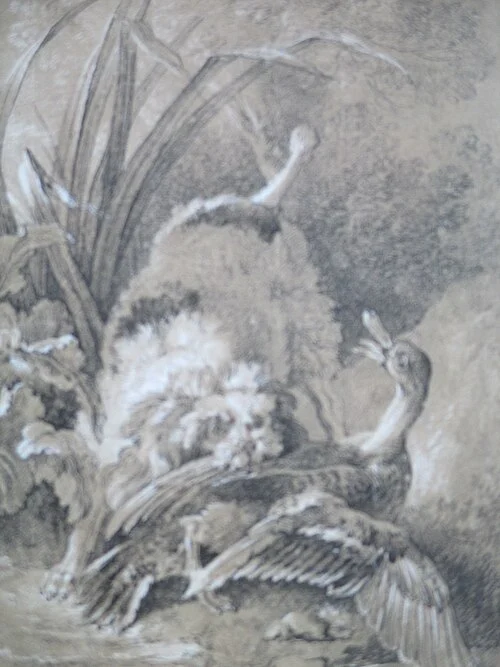
Jean-Baptiste Oudry, “Chien barbet saisissant un canard au vol” – “A Barbet Seizing a Duck in Flight,” 1726. Crayon and black chalk on paper. Collection of the Staatliches Museum Schwerin. Source: Wikimedia Commons. Public domain.
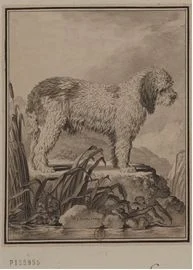
Jacques de Sève, “Le Grand Barbet,” 1755. Drawing prepared for Georges-Louis Leclerc de Buffon’s *Histoire naturelle générale et particulière*. Source: Bibliothèque nationale de France / Wikimedia Commons. Public domain.
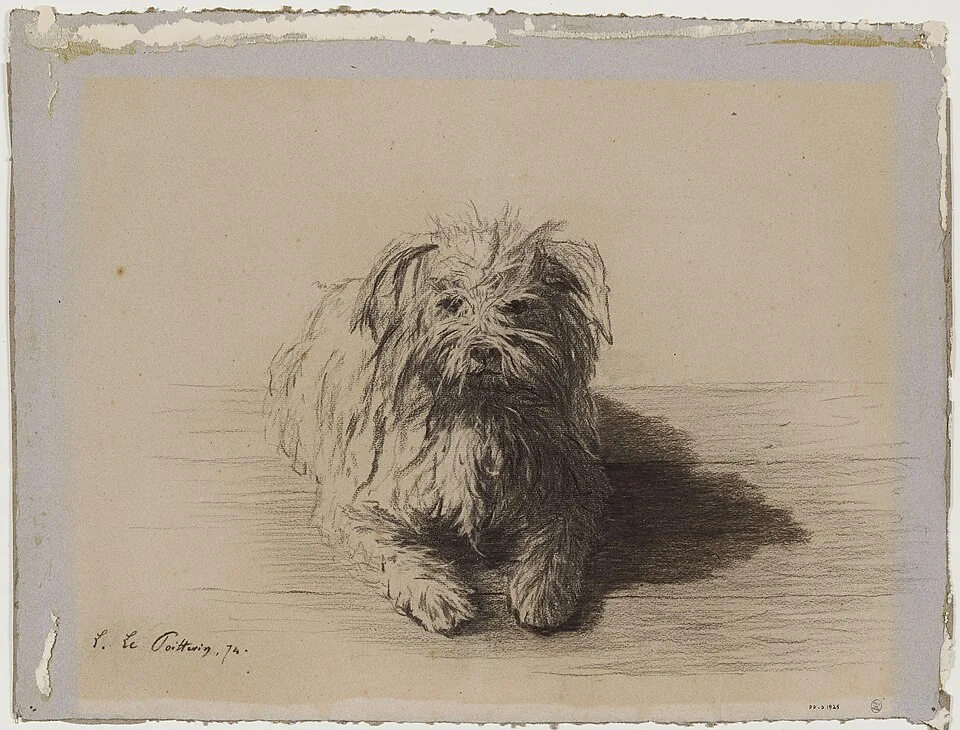
Eugène Le Poittevin, “Chien barbet,” 1874, charcoal on paper. Collection of the Petit Palais – Musée des Beaux-Arts de la Ville de Paris. Source: Paris Musées / Wikimedia Commons. CC0 license.
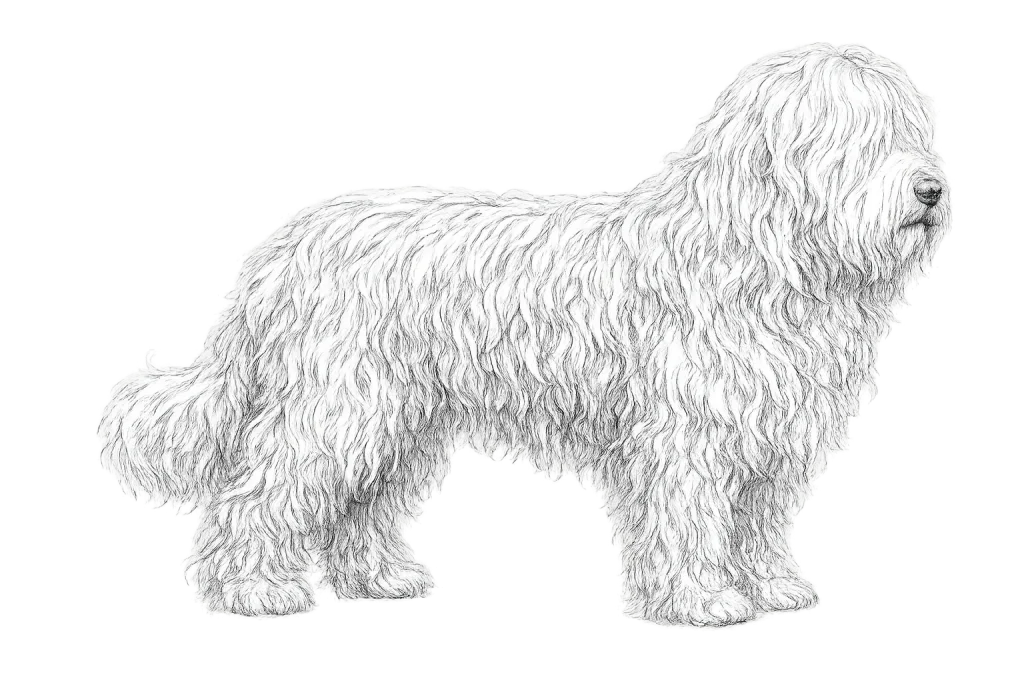
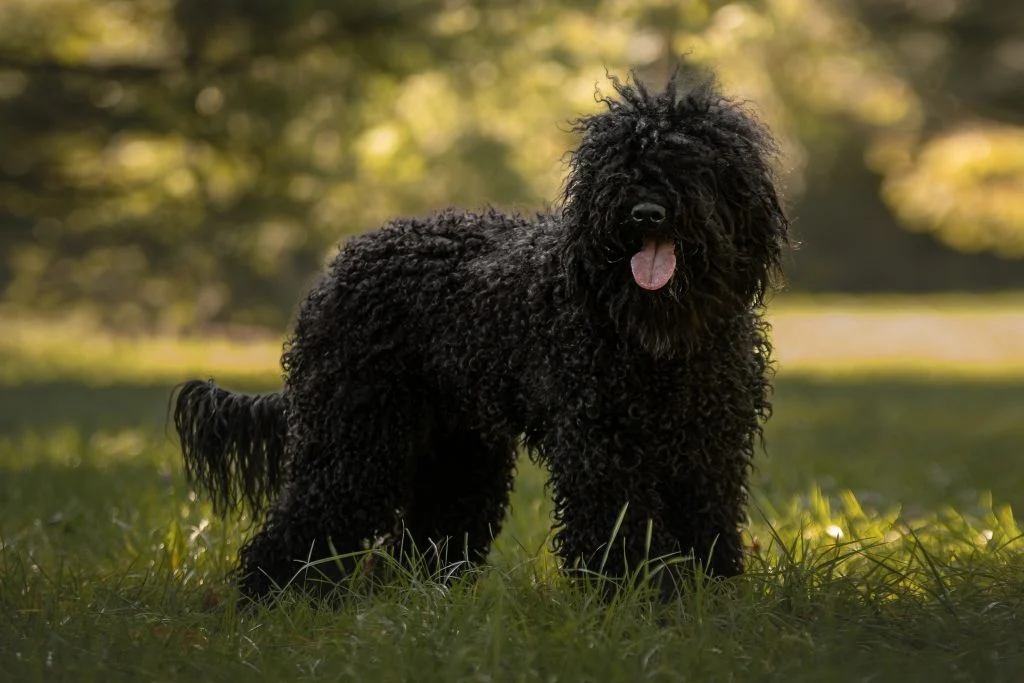
The Modern Distinction Between the Vieux Barbet and the Barbet Moderne
Among breeders and enthusiasts of the breed, there is a common distinction between the Vieux Barbet—also known as the old or traditional type of Barbet—and the Barbet Moderne, or the modern type. However, these are not two officially recognized varieties of the breed. The FCI describes a single Barbet according to a common standard and does not establish separate “vieux” and “modern” categories. These terms refer primarily to the origins of specific breeding lines and the direction in which the breed was reestablished in the second half of the 20th century.
The term “Vieux Barbet” is most commonly applied to dogs descended from older French bloodlines, preserved, among others, by breeders who continue pre-war breeding traditions. This type is generally associated with a more rustic build. It is characterized, for example, by a looser coat that is more wavy and less regularly curled. The Barbet Moderne, on the other hand, refers to lines developed during the intensive rebuilding and standardization of the breed that began in the late 1970s and continued in subsequent decades. Dogs from these lines are often characterized by a harmonious, more elegant silhouette, longer limbs, free-flowing movement, and a profuse, regularly curled coat, which has become one of the most recognizable features of the modern Barbet’s appearance.
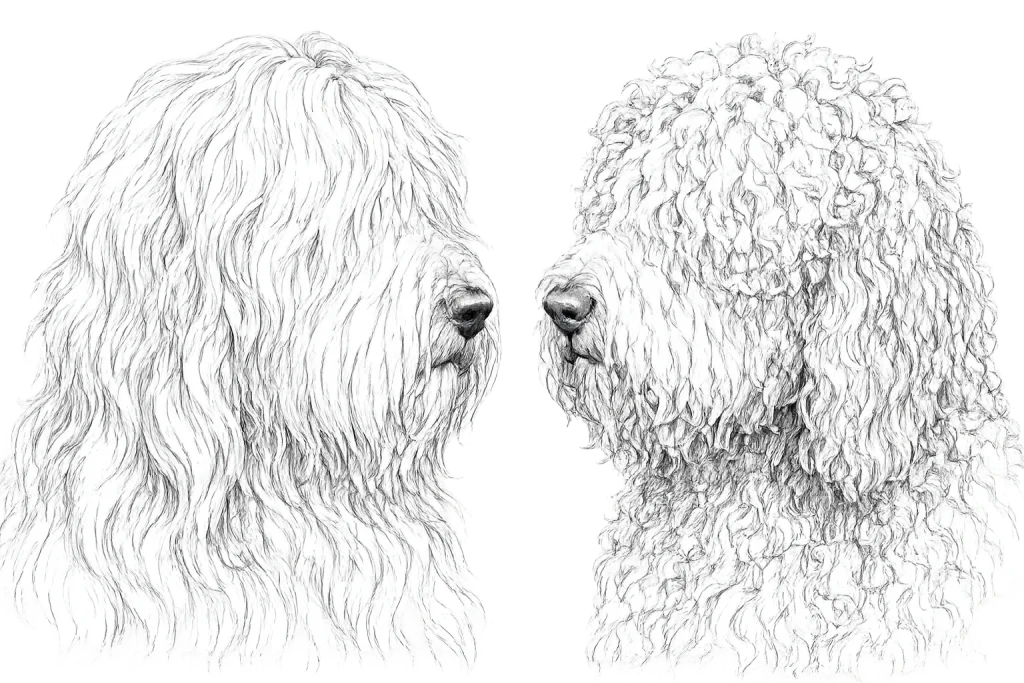
In practice, the line between the two types is becoming increasingly blurred. Many modern Barbets have pedigrees that combine lines referred to as “vieux” and “modern,” and their appearance does not always allow them to be clearly classified into one group. This distinction should be viewed primarily as a part of the breed’s history, rather than as an assessment of the quality of individual dogs. Both the “vieux” and “modern” lines have played a significant role in preserving the Barbet. The most important goal of modern breeding today remains the combination of the best traits. It is precisely the diversity of the modern population that ensures the Barbet remains a vibrant, evolving breed capable of preserving its original character in a changing world.